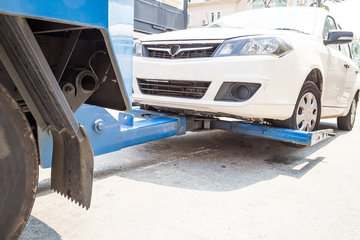
What Can I Do if I Cosigned on a Car That Was Repossessed?
The NFCC often receives questions from readers about their money challenges. We answer common questions in our Ask an Expert series to help readers find the information they need.
Question: I cosigned a car loan for a vehicle that was inoperable and ended up being repossessed. What do I need to do now?
Answer: Dear Reader,
A car repossession is a serious situation that requires quick action to address the legal and financial impact. As the loan cosigner, you have both rights and liabilities, and knowing them will help you understand how to respond to this situation. I’ll break down the basics for you below.
Please understand that this response is not legal advice. For information on the laws in your state, contact your state attorney general or state consumer protection agency.
Your rights and responsibilities as a car loan cosigner
As a cosigner for a car loan, you’re fully responsible for repaying the loan if the primary borrower can’t make the payments. And just like the primary borrower, your credit will be negatively impacted by missed payments and vehicle repossession.
What happens if the primary borrower stops making payments? The lender will likely seek to collect the “deficiency balance” from you. This is the amount owed on the loan, plus any fees and expenses related to repossession, minus the amount the lender collects from selling the car. Unfortunately, the lender may choose to sue you for this money.
How to handle car repossession as a cosigner
As the cosigner, you’ll need to be proactive after the car is repossessed. There are a few things the lender may do, and each one can impact you differently.
If the car is worth more than the balance owed on the loan, the lender may decide to keep it. However, if the car is inoperable and not worth the money to fix, the creditor will likely sell the car at auction. At auction, the lender is not likely to recover the full balance owed.
If the lender does decide to sell, you should take the following steps:
- Get a copy of the contract and review its terms and conditions to know your rights.
- Look for notifications from the lender informing you of when and where the car will be sold. Make sure to keep all notifications.
- After the sale, look for a notification stating the deficiency balance.
- The lender may attempt to collect the debt or sell it to a collection agency.
- If the primary borrower can’t or won’t pay, consider contacting the creditor to negotiate a debt settlement or an affordable payment arrangement. Creditors usually expect the debt to be paid back in very few payments.
- Get the details of your agreement in writing before sending any payments.
It’s important to mention that if you have $600 or more worth of debt forgiven in a settlement, you may be taxed on the forgiven amount.
If you’re unable to reach an agreement with the creditor, it’s still possible to explore other solutions. You can make an appointment to talk to an NFCC-certified credit counselor who will review your budget and credit reports, and share strategies for managing the lender’s bill. Your credit counselor can also offer personalized tips for rebuilding your credit after this difficult event.
Sincerely,
Bruce McClary, Vice President of Communications
Bruce McClary is the Vice President of Communications for the National Foundation for Credit Counseling® (NFCC®). Based in Washington, D.C., he provides marketing and media relations support for the NFCC and its member agencies serving all 50 states and Puerto Rico. Bruce is considered a subject matter expert and interfaces with the national media, serving as a primary representative for the organization. He has been a featured financial expert for the nation’s top news outlets, including USA Today, MSNBC, NBC News, The New York Times, the Wall Street Journal, CNN, MarketWatch, Fox Business, and hundreds of local media outlets from coast to coast.